Distribution chain of non-prescription medicines
How does the distribution chain of medicines work?
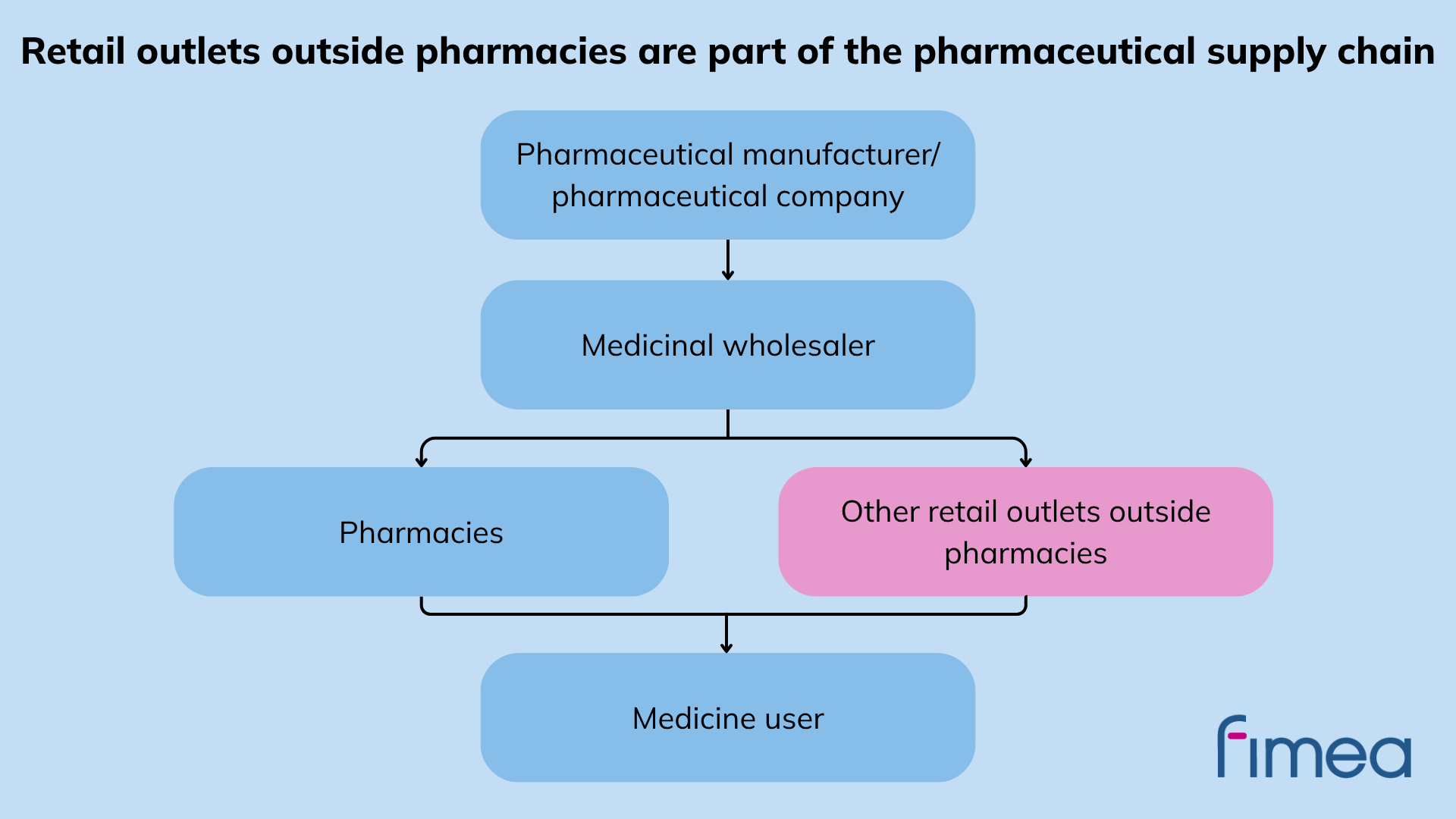
The distribution of non-prescription medicines follows same principles and requirements as the distribution of all other medicinal products. Distribution is part of the pharmaceutical supply chain, which is strictly supervised from manufacturing all the way to retail sale.
A medicinal wholesaler licensed by Fimea procures non-prescription medicines from the manufacturer and distributes them to retailers of non-prescription medicines, such as pharmacies and retail stores holding a retail licence. Medicine users obtain their medicines from retailers.
How does a retail store obtain non-prescription medicines from a medicinal wholesaler?
A retail store selling non-prescription medicines must have a licence for the sale of non-prescription medicines. The licence is specific to each retail store. This retail licence authorises the sale of non-prescription medicines only directly to consumers at the retail store in question.
Retail stores selling non-prescription medicines obtain medicines from a medicinal wholesaler or directly from the manufacturer. Medicinal wholesaling may only be carried out under a licence granted by Fimea, obtaining which requires, among other things, appropriate premises, equipment and personnel. A medicinal wholesaler must have a responsible person in a direct employment relationship, who is a licensed pharmacist (MSc Pharm). Compliance with the EU quality guidelines, i.e. Good Distribution Practice (GDP), is a prerequisite for medicinal wholesaling activities.
A retail store holding a retail licence and a medicinal wholesaler establish a customer relationship. Medicinal wholesalers obtain information on licensed retail stores from a list of non-prescription medicine retail stores maintained by Fimea (in Finnish).
Retail stores selling non-prescription medicines may procure from a medicinal wholesaler only those non-prescription medicines for which a pharmaceutical company has applied for and that have been granted an expansion of sales channel (sale outside pharmacies). Pharmaceutical companies may apply for an expansion of sales channel only for non-prescription medicines included in the restricted selection, which is defined in the Medicines Decree available in the Finlex online service (in Finnish).
What should be taken into account in the transport of non-prescription medicines from a medicinal wholesaler to a retail store?
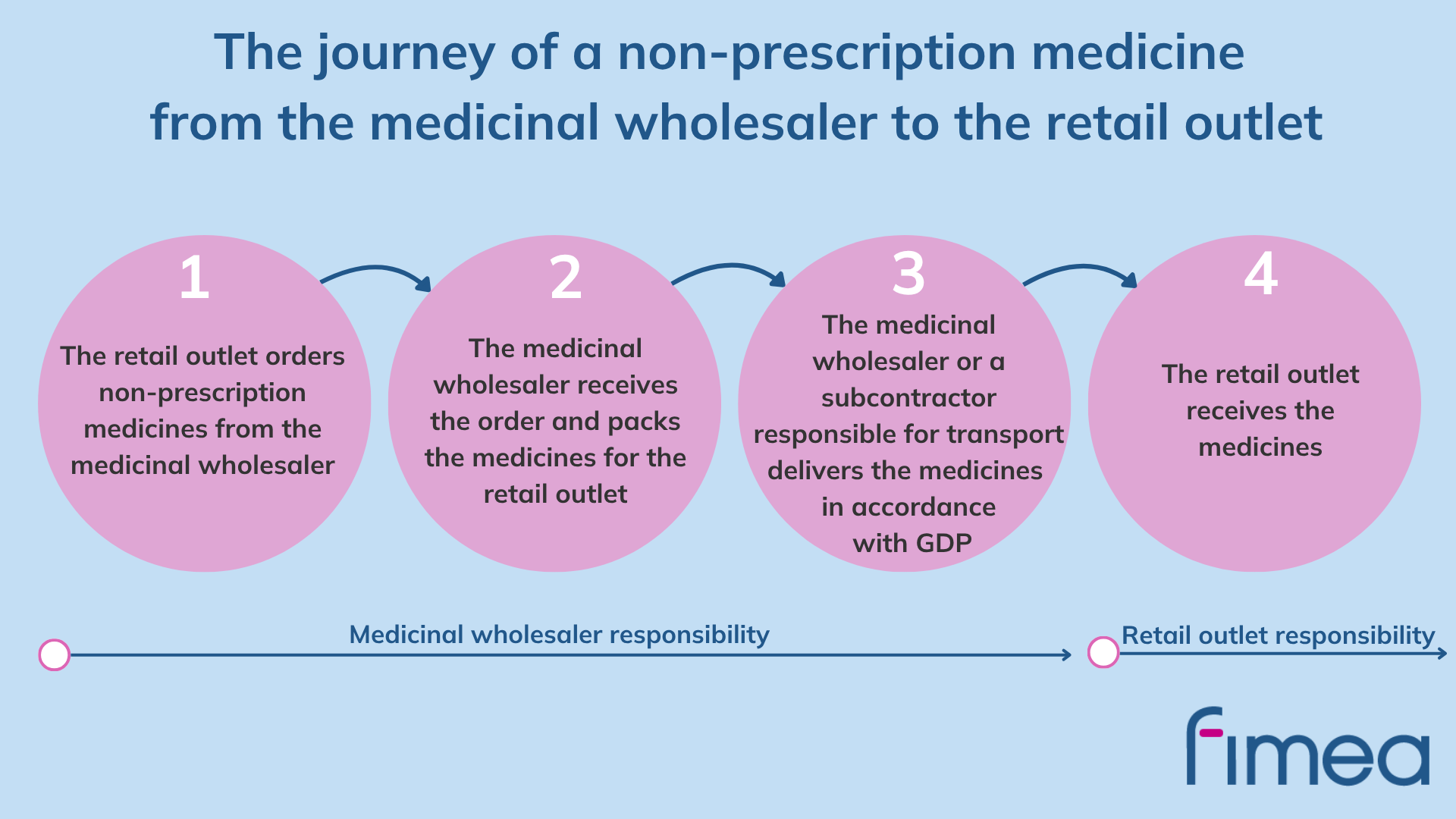
Wholesale distribution of medicinal products is responsible for the quality of the medicinal product until it is handed over to the retail store. This also includes transportation. Wholesale distribution of medicinal products must transport medicines in accordance with good distribution practices (GDP), which ensures that the medicines remain of appropriate quality.
A medicinal wholesaler may outsource transport to a subcontractor, but responsibility for the medicines and for supervising the subcontractor remains with the medicinal wholesaler. The medicinal wholesaler must ensure that transport is carried out appropriately, for example through agreements and by auditing the transport provider. Medicines may not, for example, be stored or repackaged at central warehouses of retail stores.
How are non-prescription medicines stored?
Medicines may only be stored by a medicinal wholesaler operating under a licence granted by Fimea, if the licence covers the storage of medicines. Holders of a retail licence for non-prescription medicines may not store medicines, for example at their central warehouses, without their own medicinal wholesaling licence.
A retail store may store the non-prescription medicines it has procured in the storage facilities of the retail store, as specified in the application for a retail licence. The obligations related to storage, such as monitoring storage conditions, are described in more detail in the responsibilities of the retail store.
Lue lisää
Supervision, guidance and advice on medicinal wholesaling: Medicinal product wholesale dealer's licence